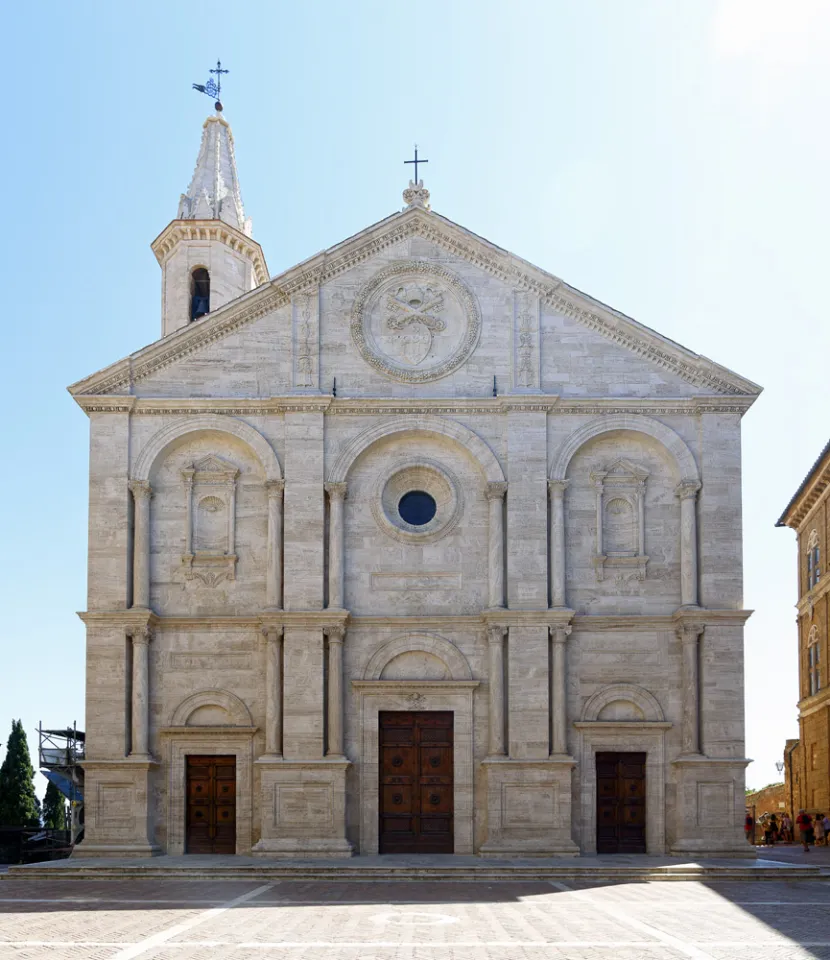
Pienza
This town was reconstructed as an ideal Renaissance city under Pope Pius II. It is noted for its geometric urban planning and local pecorino production.
Walk the perimeter walls for views of the Orcia valley.

The Val d'Orcia is not a monument with a turnstile. It is a UNESCO World Heritage cultural landscape of roughly 60,000 hectares in the Province of Siena, and the things worth seeing are scattered across it. This page sorts them into an order that survives contact with a real day.
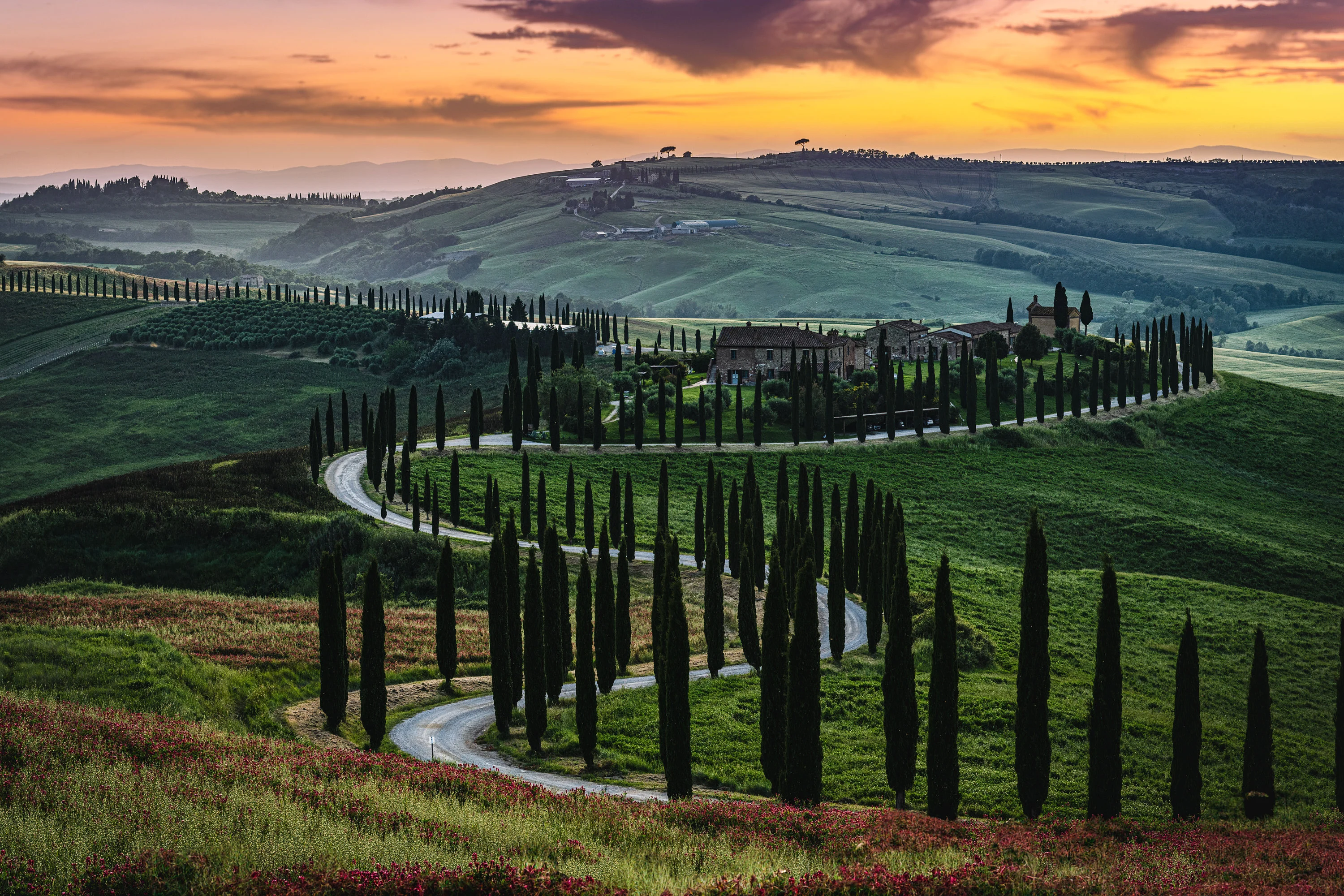
Quick answer
There is no entrance fee: admission is 0 EUR, and the valley is open countryside accessible to the public, 00:00–23:59 every day of the week. What you actually see is decided by daylight and route, not by a gate. The core sights are Pienza, Montalcino, San Quirico d'Orcia, Bagno Vignoni, Radicofani and the Cappella della Madonna di Vitaleta.
The valley's most photographed farmhouse, Podere Belvedere, has no visitor entrance at all — it is a private working property seen only from the roadside above San Quirico d'Orcia. That single fact explains the whole region. Val d'Orcia what to see is a question about landscape rather than architecture, and the answer is a sequence of stops along the SR2 Cassia and the white gravel strade bianche that branch from it, most of them viewed from outside rather than entered. The reader is dealing with a UNESCO World Heritage cultural landscape inscribed in 2004, covering five comuni: Pienza, Montalcino, San Quirico d'Orcia, Castiglione d'Orcia and Radicofani. Each contributes something the others do not. Pienza is the deliberate one — Pope Pius II rebuilt his birthplace as a Renaissance ideal city in the 1460s, and its Piazza Pio II, Palazzo Piccolomini and the pecorino shops along Corso Rossellino fit inside ninety minutes. Montalcino sits higher, wrapped around a fourteenth-century fortezza, and is the Brunello capital. San Quirico d'Orcia holds the Collegiata dei Santi Quirico e Giulitta and the box-hedge geometry of the Horti Leonini. Bagno Vignoni replaces its main square with a stone basin of thermal water fed by a volcanic spring, used since Etruscan and Roman times and later by Saint Catherine of Siena. Radicofani, on its basalt outcrop, is the outlier most itineraries skip and the one with the widest horizon. Between them stand the isolated set-pieces: the Cappella della Madonna di Vitaleta, the Cappella di Vitaleta's cypress avenue, and the Abbazia di Sant'Antimo, a Romanesque abbey in travertine below Castelnuovo dell'Abate. What to do with this is a matter of restraint. Most Val d'Orcia tours from Florence cover two villages and two viewpoints, and that is the honest ceiling for a single day; three villages is possible only if lunch is short. Visitors staying locally should treat Pienza and Montalcino as separate half-days rather than a single loop. Anyone building a val d'orcia what to see guide around photography should note that the terracotta-and-gold colour the valley is known for belongs to late spring and autumn — by mid-August the wheat is long cut and the hills read pale and shorn. Fix the itinerary to distances, not to the number of Tuscan landmarks on a list, and the valley becomes navigable.
“Val d'Orcia is a question about landscape rather than architecture, and most of its sights are viewed from outside rather than entered.”
Val d'Orcia, a UNESCO World Heritage site, is defined by its preserved medieval hill towns and meticulously managed agricultural landscapes. This region serves as a prominent example of Renaissance landscape design and rural settlement.
This town was reconstructed as an ideal Renaissance city under Pope Pius II. It is noted for its geometric urban planning and local pecorino production.
Walk the perimeter walls for views of the Orcia valley.
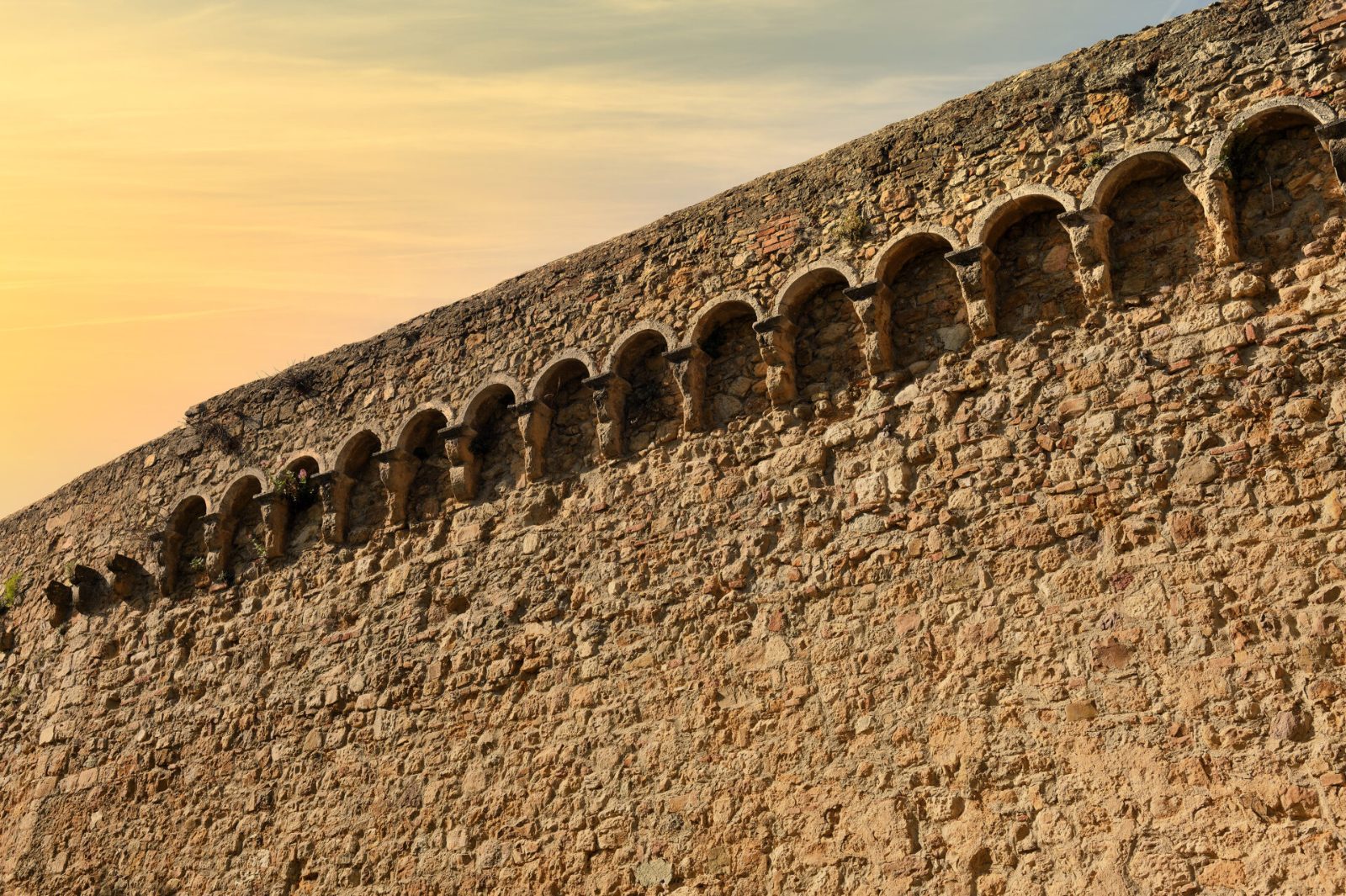
A central hub along the Via Francigena, this village features the Romanesque Collegiata and the nearby Horti Leonini gardens. It retains a high concentration of medieval fortifications.
Visit the Horti Leonini for a preserved Renaissance garden layout.
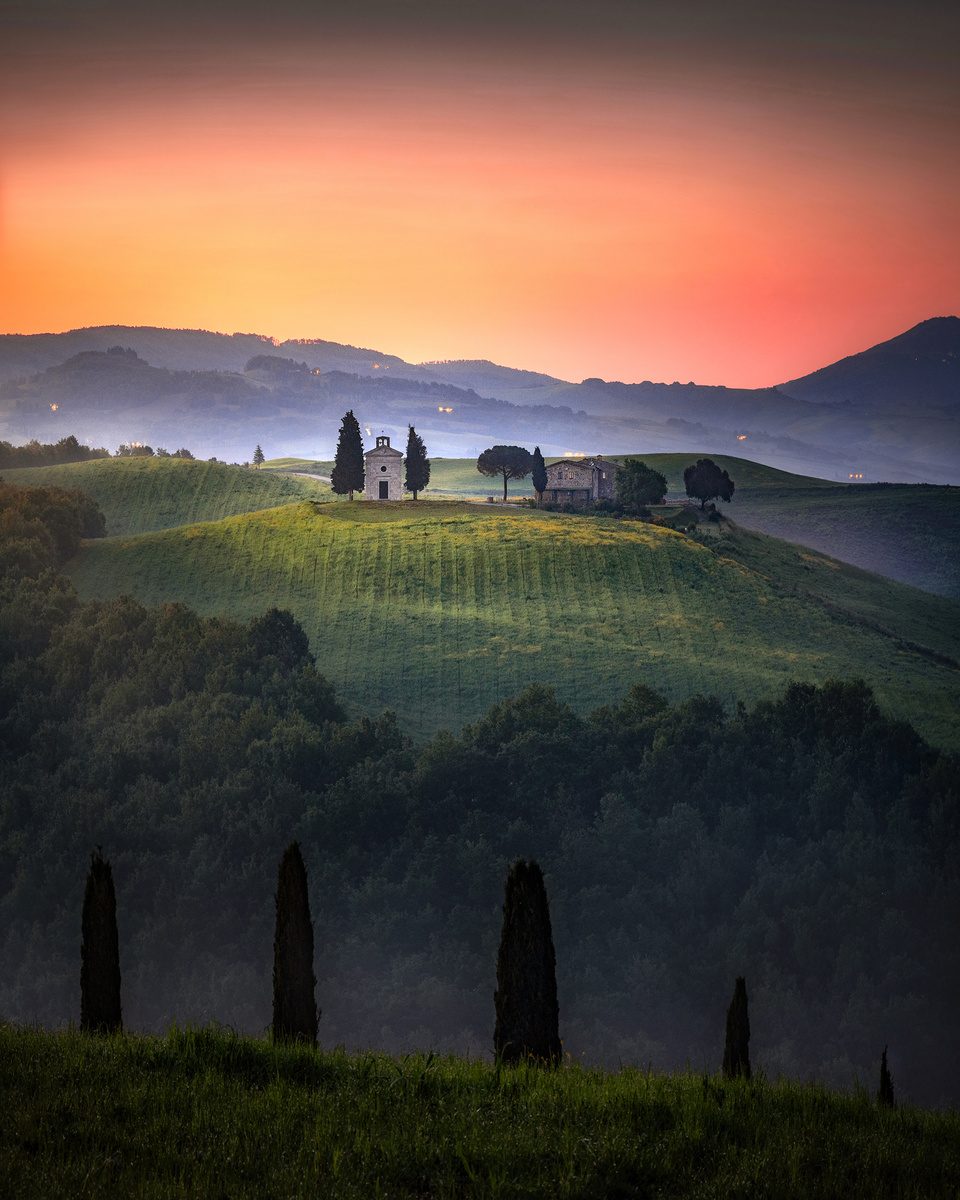
Situated on a hill between San Quirico and Pienza, this small chapel is framed by cypress trees. It is a landmark of the valley's rural topography.
Approach from the road to capture the chapel and cypresses.
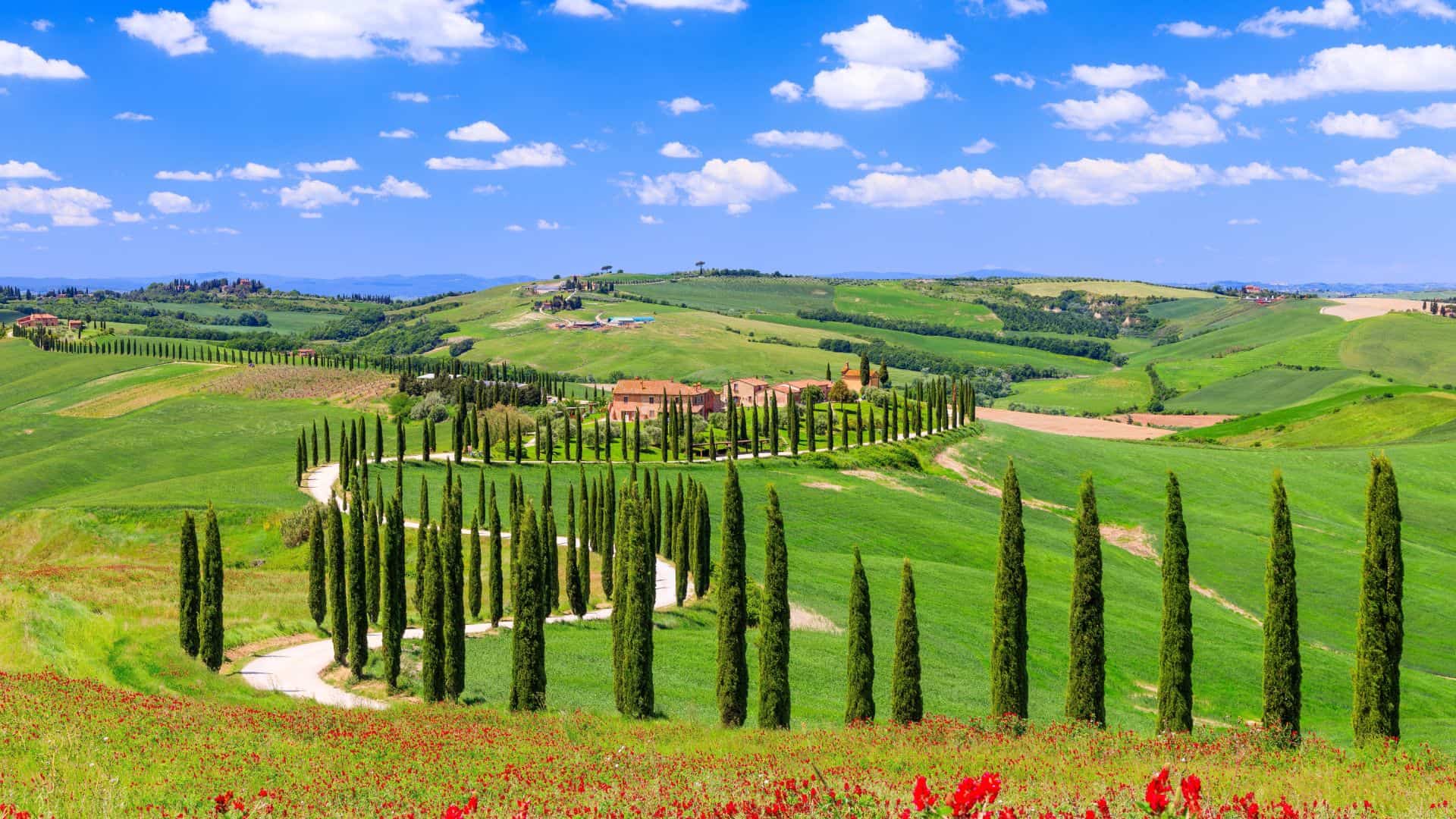
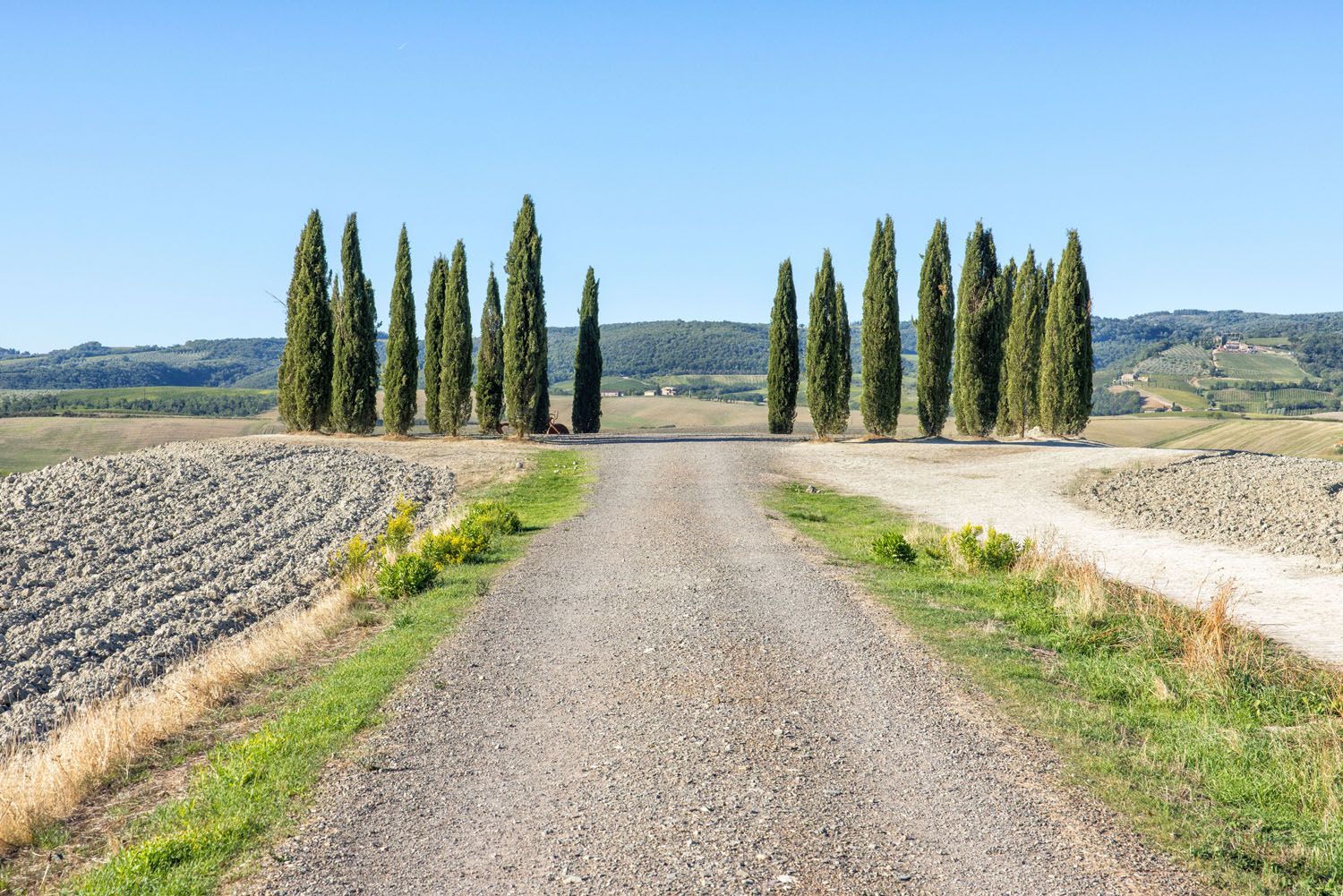
These organized rows of cypress trees are symbolic of the Tuscan landscape. They are found throughout the valley, particularly near Monticchiello and along secondary roads.
Look for the circular groves near the village of Monticchiello.
The best arrival window for Val d'Orcia is 06:00–10:00 to utilize optimal morning light for landscape photography and maintain comfortable temperatures. Choosing your visit based on seasonal shifts ensures the landscape aligns with typical Tuscan aesthetics.
Mild temperatures (15°C–22°C)
The landscape is vibrant green with wildflowers in bloom.
Hot and dry (28°C–35°C)
Fields transition to golden hues, though midday heat is intense.
Cooler temperatures (15°C–24°C)
Harvest season begins and morning fog frequently settles in the valley.
—
These hours offer the most consistent light for photography and quieter access to rural paths.
Verdict: For the best balance of light and accessibility, plan your visit from Tuesday to Thursday between 06:00 and 10:00 during the months of April or October.
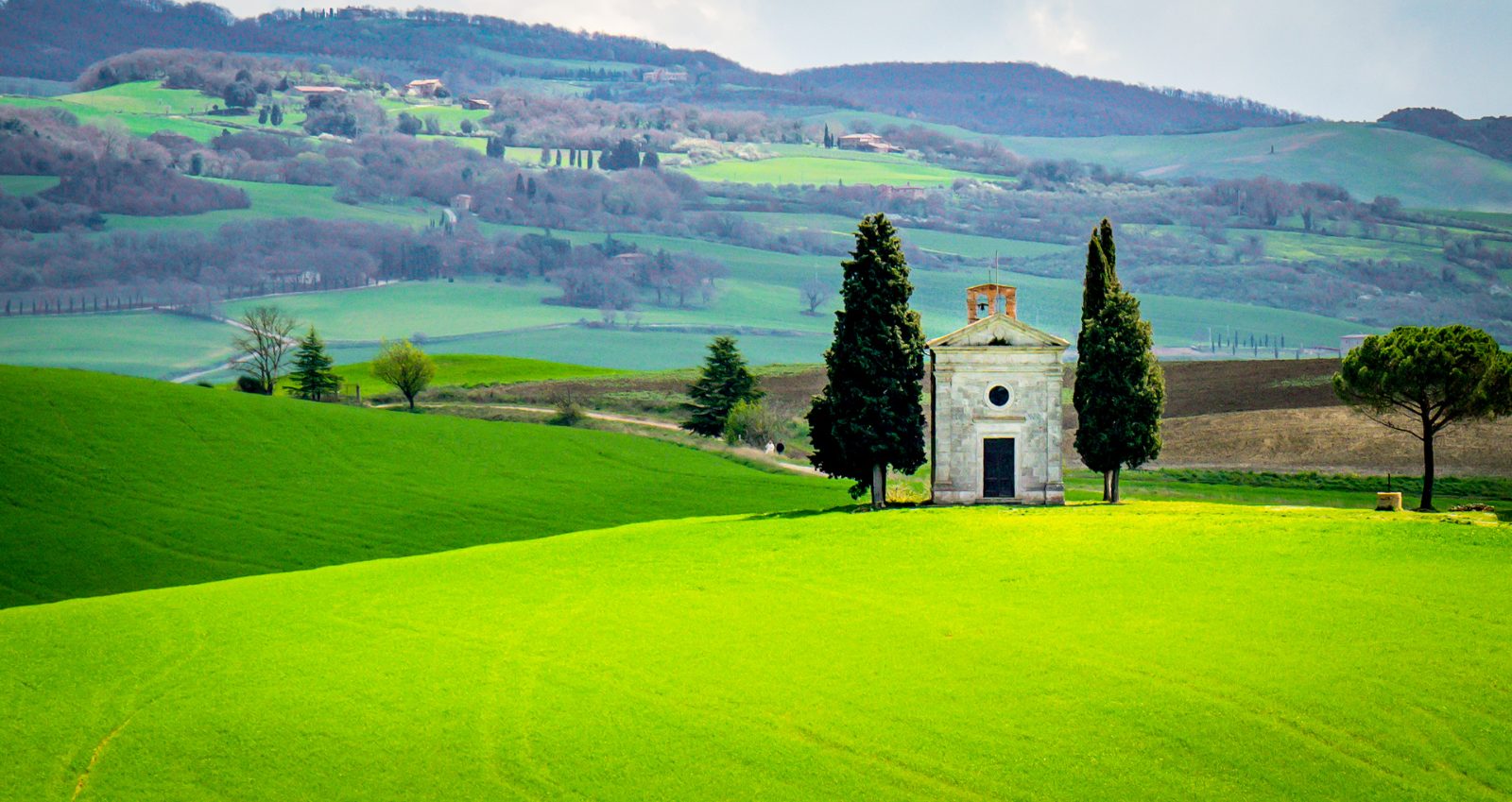
Early morning or late afternoon
Capture the lone chapel set against rolling hills from the roadside viewpoint along the SP146.
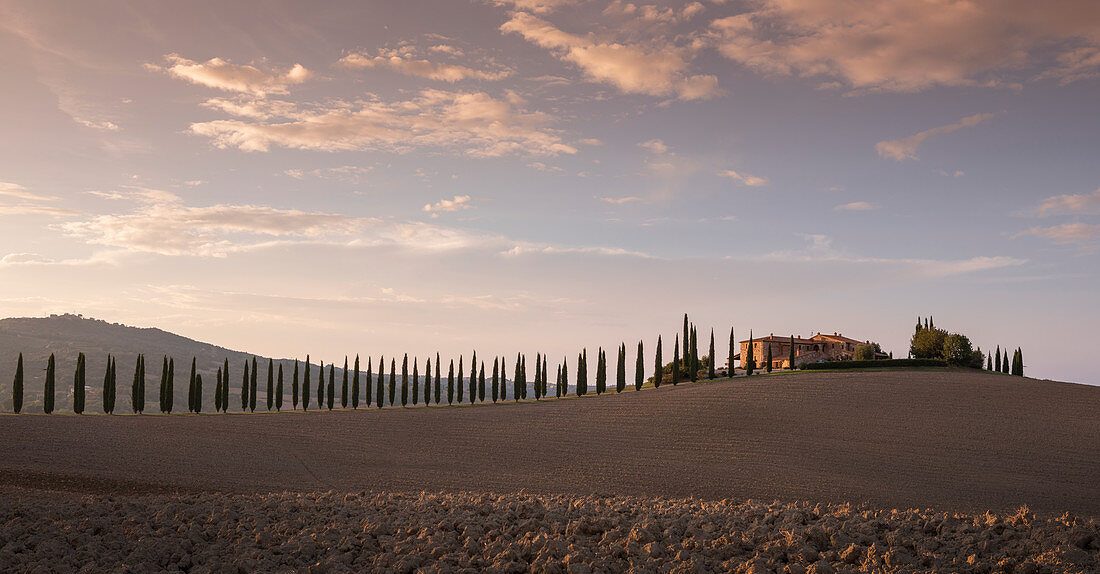
Early morning
Frame the iconic cypress-lined driveway leading toward the symmetrical farmhouse from the road edge.
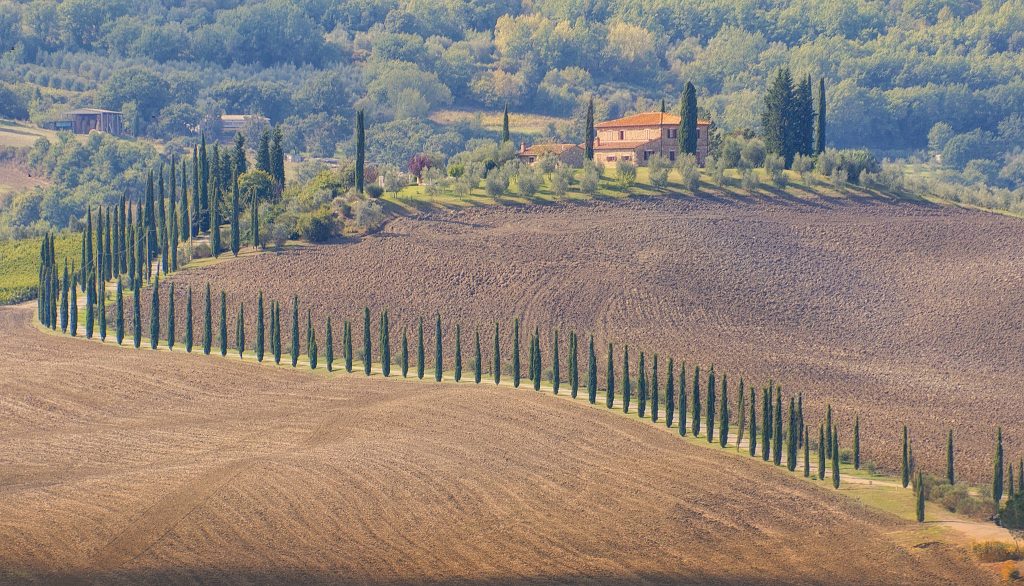
Early morning
Photograph the winding path and cypress trees in the field famously featured in cinema.
Golden hour
Focus on the dense, circular cluster of cypresses isolated in the middle of a grassy field.
Val d'Orcia is located in the Province of Siena, Tuscany, Italy. Private or personal transport is necessary to navigate the rural road network efficiently.
SR2 (Via Cassia) from Florence or Siena
Autolinee Toscane (Line 112) from Siena to San Quirico d'Orcia
Regional train to Chiusi-Chianciano Terme then local bus
The region is open countryside; arriving between 06:00–10:00 ensures optimal light for landscape photography and cooler temperatures.
Val d'Orcia is a public region consisting of open countryside, roads, and villages that remain accessible to visitors at all times. The area is open daily throughout the year.
Everything you need to know about val d'orcia what to see
Travelers often prioritize the medieval villages of Pienza, Montalcino, and San Quirico d'Orcia when considering val d'orcia what to see. These locations offer a rich blend of Renaissance architecture, rolling hills, and historic landmarks recognized as UNESCO World Heritage sites. Other points of interest include thermal baths and cypress-lined driveways.
A thorough exploration of the region typically requires at least one full day. Many visitors choose a multi-day itinerary to fully enjoy the landscape and cultural heritage of this Tuscan destination.
The Val d'Orcia region is an open countryside accessible to the public, meaning there is no entrance fee. You are free to explore the scenic roads and rural landscapes at no cost.
The best arrival window for landscape photography is between 06:00 and 10:00. This timeframe provides the optimal morning light and cooler temperatures before the heat of the day.
Various professional tours are available for those looking for a guided val d'orcia what to see experience from nearby cities like Florence. These excursions typically handle logistics and transport, allowing you to focus on the scenic views and local history.
The region is very family-friendly, offering plenty of open space for walking and exploring small, quiet towns. It is a peaceful environment suitable for families who enjoy outdoor activities and rural history.
A common mistake is attempting to rush through the area in a few hours without planning for travel time between the various hilltop towns. It is best to focus on a few key sites to avoid spending your entire day in transit.
Val d'Orcia Small-Group Tours from Florence
Read more Tickets & toursPrivate Tours from Florence to Val d'Orcia
Read more Tickets & toursVal d'Orcia Day Trips from Florence
Read more Tickets & toursFlorence to Val d'Orcia Wine Tours
Read more GuideHow to Get from Florence to Val d'Orcia
Read more